Spot bottlenecks early
Profiles as input for grid calculation (e.g. NEPLAN) – pinpoint hotspots such as voltage-band violations and overloaded transformers and lines.
SEP.multiload precisely simulates load curves and energy flows – down to 15-minute resolution – giving you a solid basis for decisions in grid planning, energy communities and the sale of energy services. No data entry required: all the data you need is already in the Swiss Energy Planning platform.
Solid decision bases for target-grid planning, risk management and strategic asset management at building, neighbourhood or supply-area level – with load forecasts grounded in real building data.
A typical target-grid-planning scenario: building-level load profiles condense into a consistent grid model with four load types – the basis to project demand to 2035 and 2050 and spot future bottlenecks early. SEP.multiload supports you!
Profiles as input for grid calculation (e.g. NEPLAN) – pinpoint hotspots such as voltage-band violations and overloaded transformers and lines.
Reliably fill missing values via SEP data and AI.
Consistent, building-level basis for planning, asset management and investment decisions.
Building- and neighbourhood-based simulation of electricity and heat demand at 15-minute resolution.
Automatic calculation of solar yield and self-consumption scenarios based on roof area and irradiation.
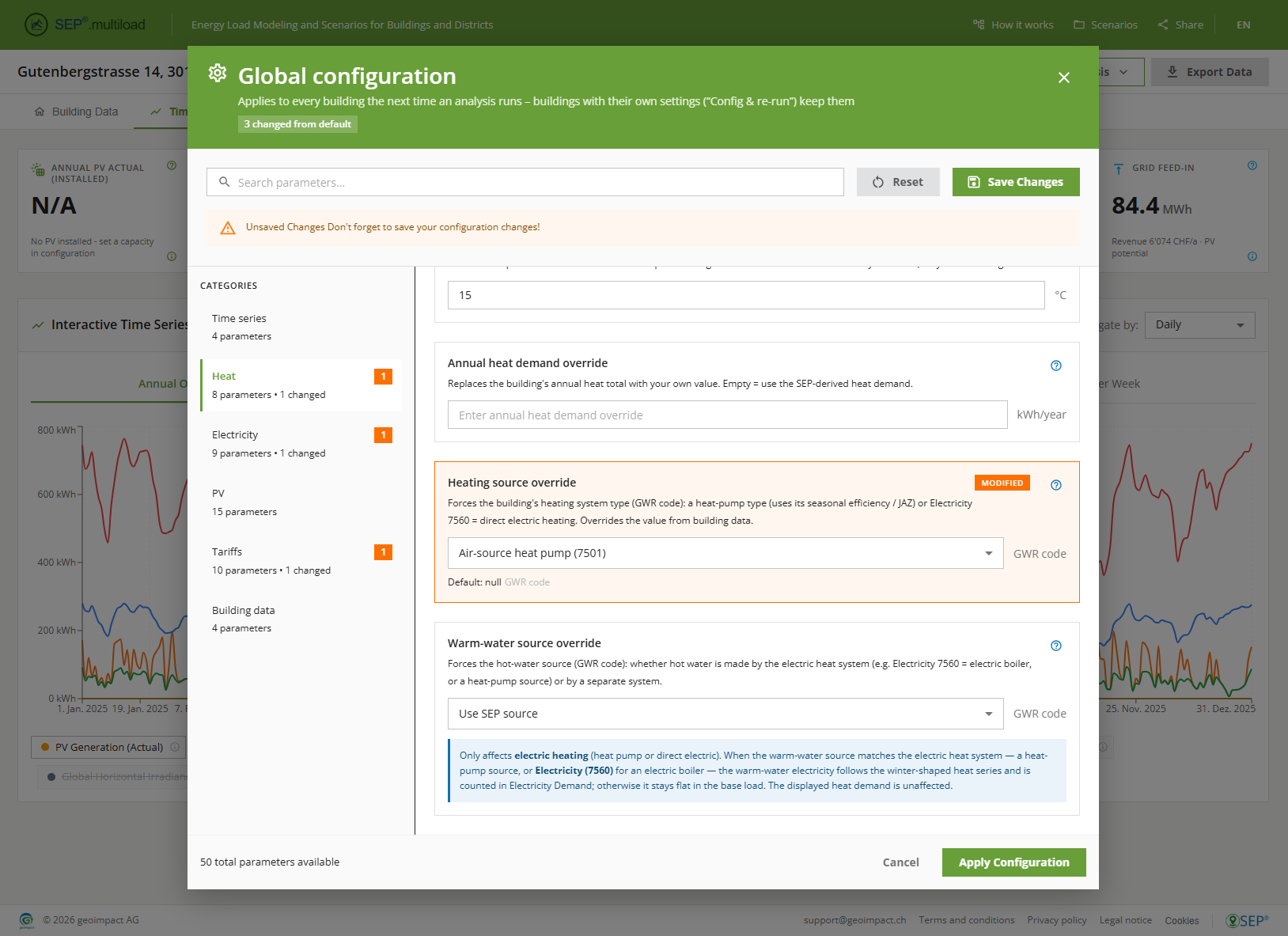
Flexibly configure heating replacement, PV installation and electricity demand – override and recalculate right in the interface.
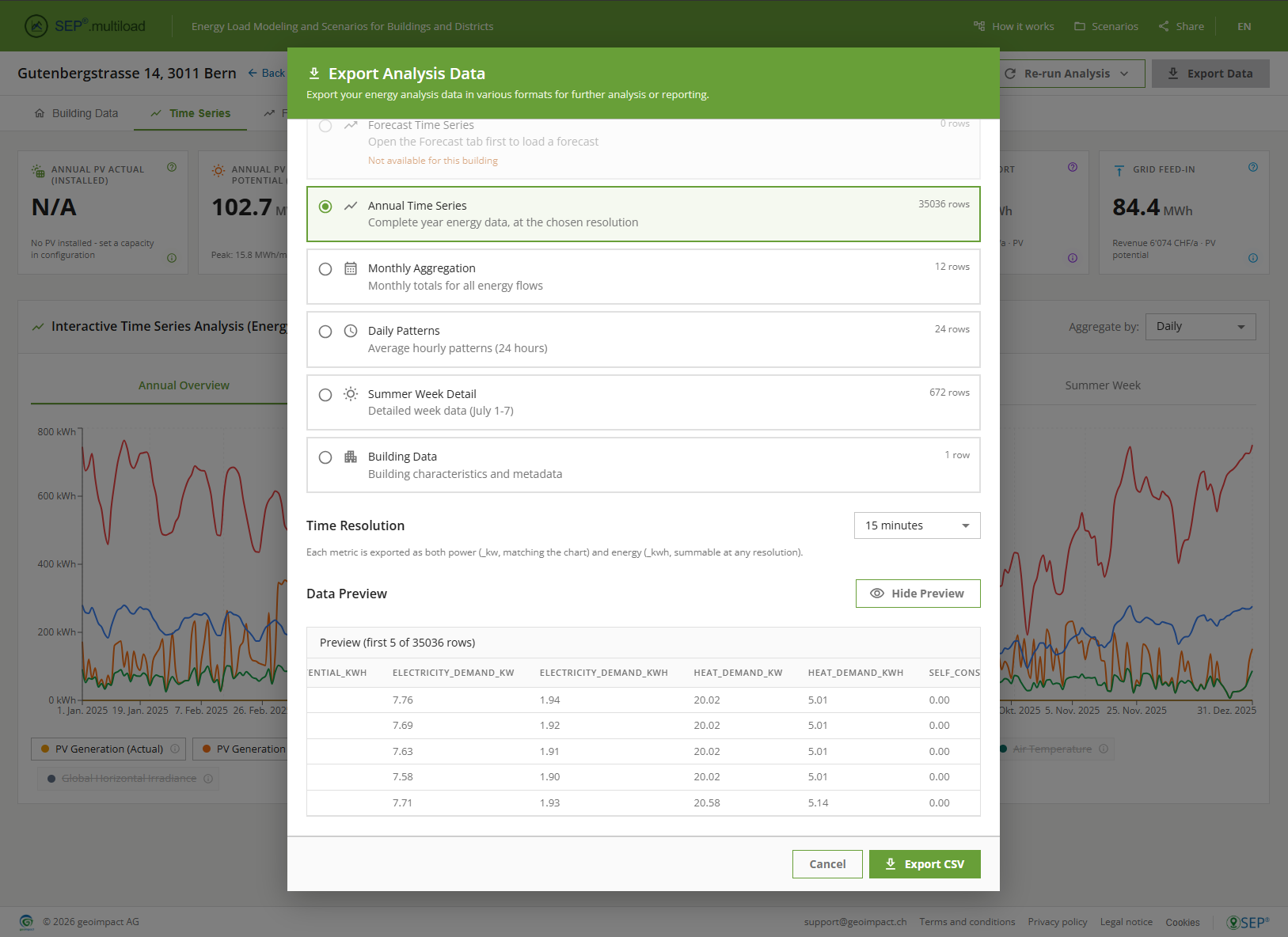
CSV export of results: load profiles at 15-minute resolution, monthly sums, daily patterns and building metadata.
Seamless integration with access to authorised building and grid data – including grid-operator-specific tariffs.
Generate load profiles via API – from single addresses through ZEV, vZEV and LEG to entire neighbourhoods, municipalities and supply areas, directly in your own systems.
SEP.multiload opens in its own lean interface – login via SEP account. You analyse while working on your project.
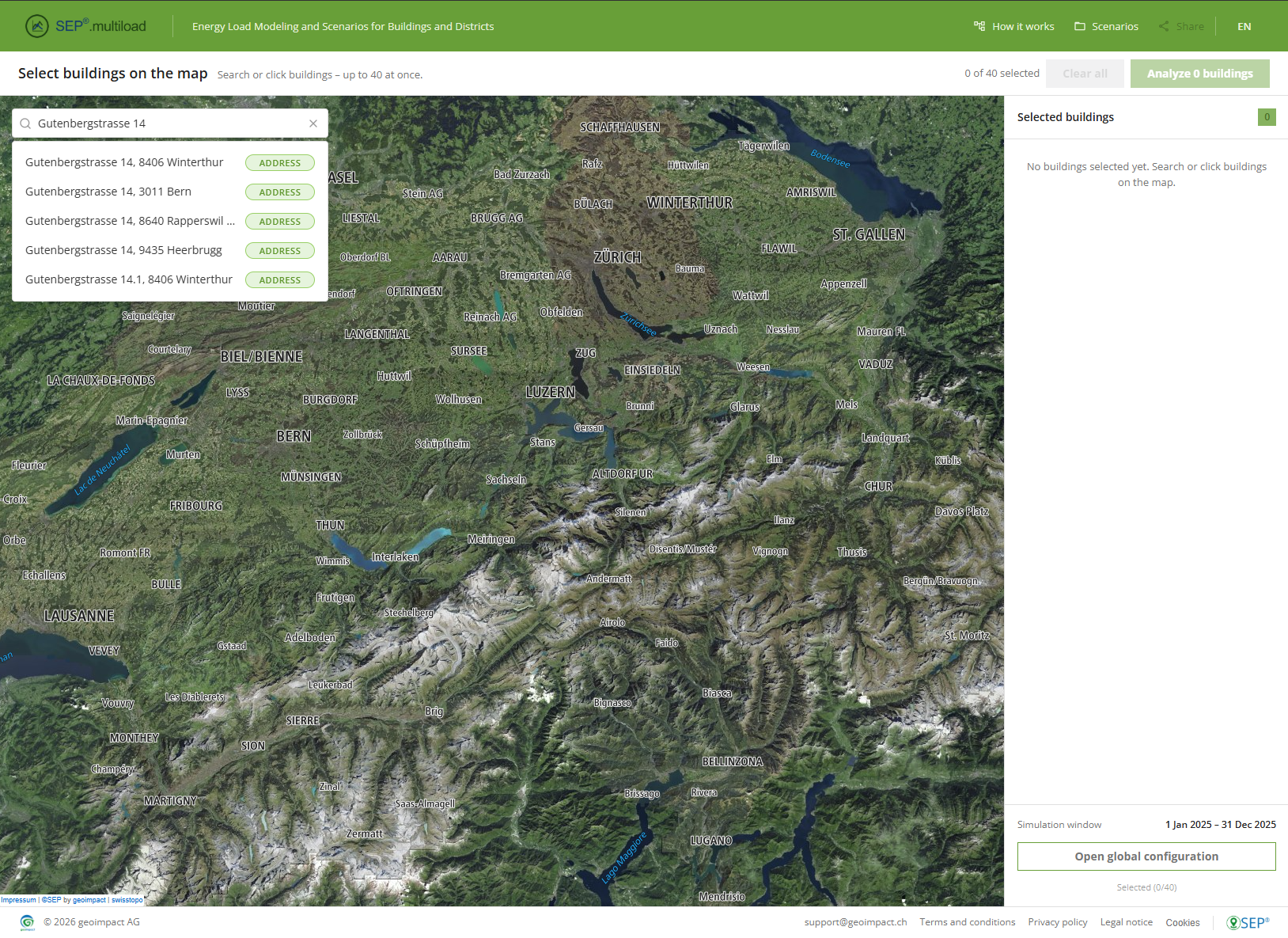
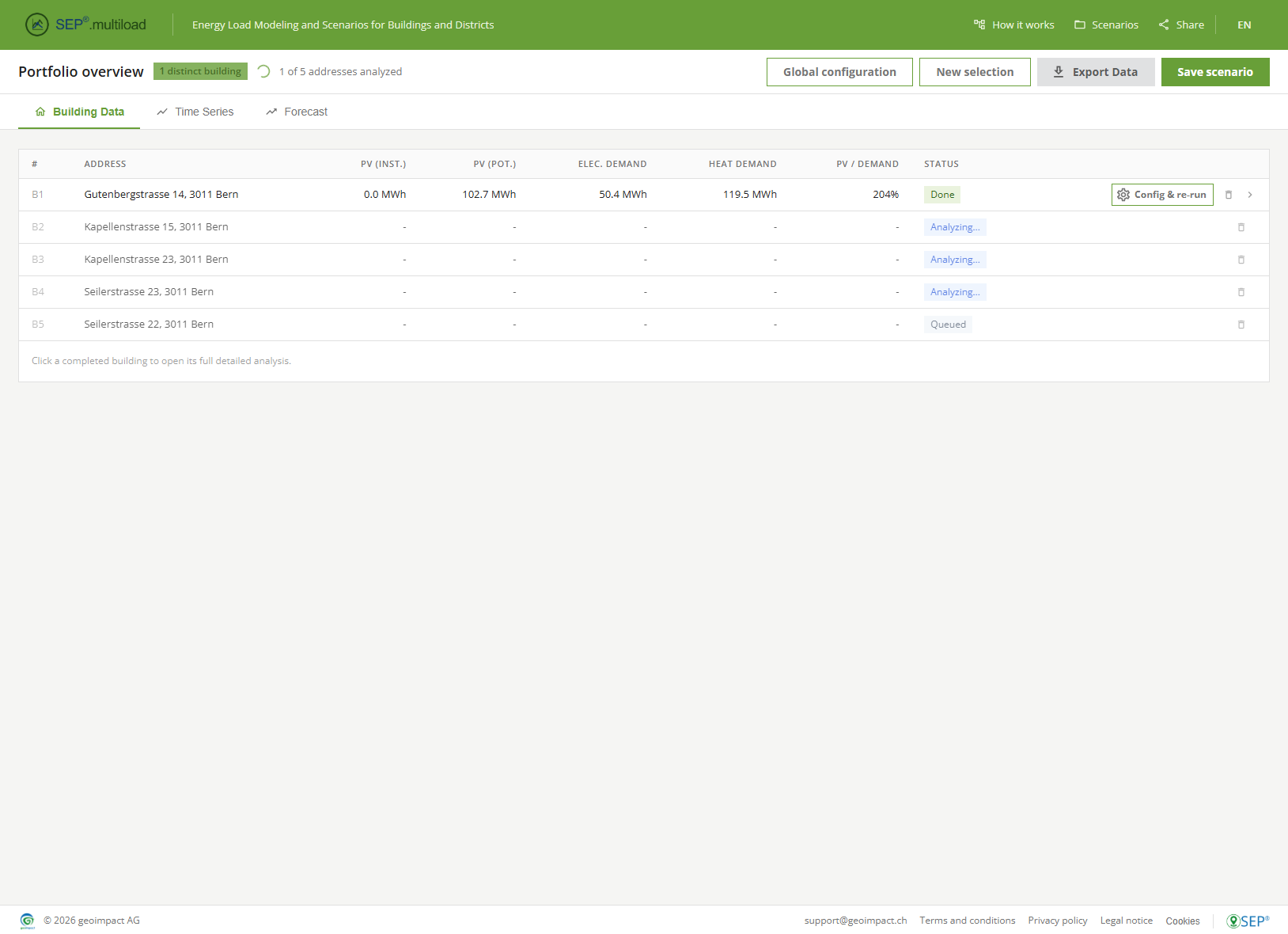
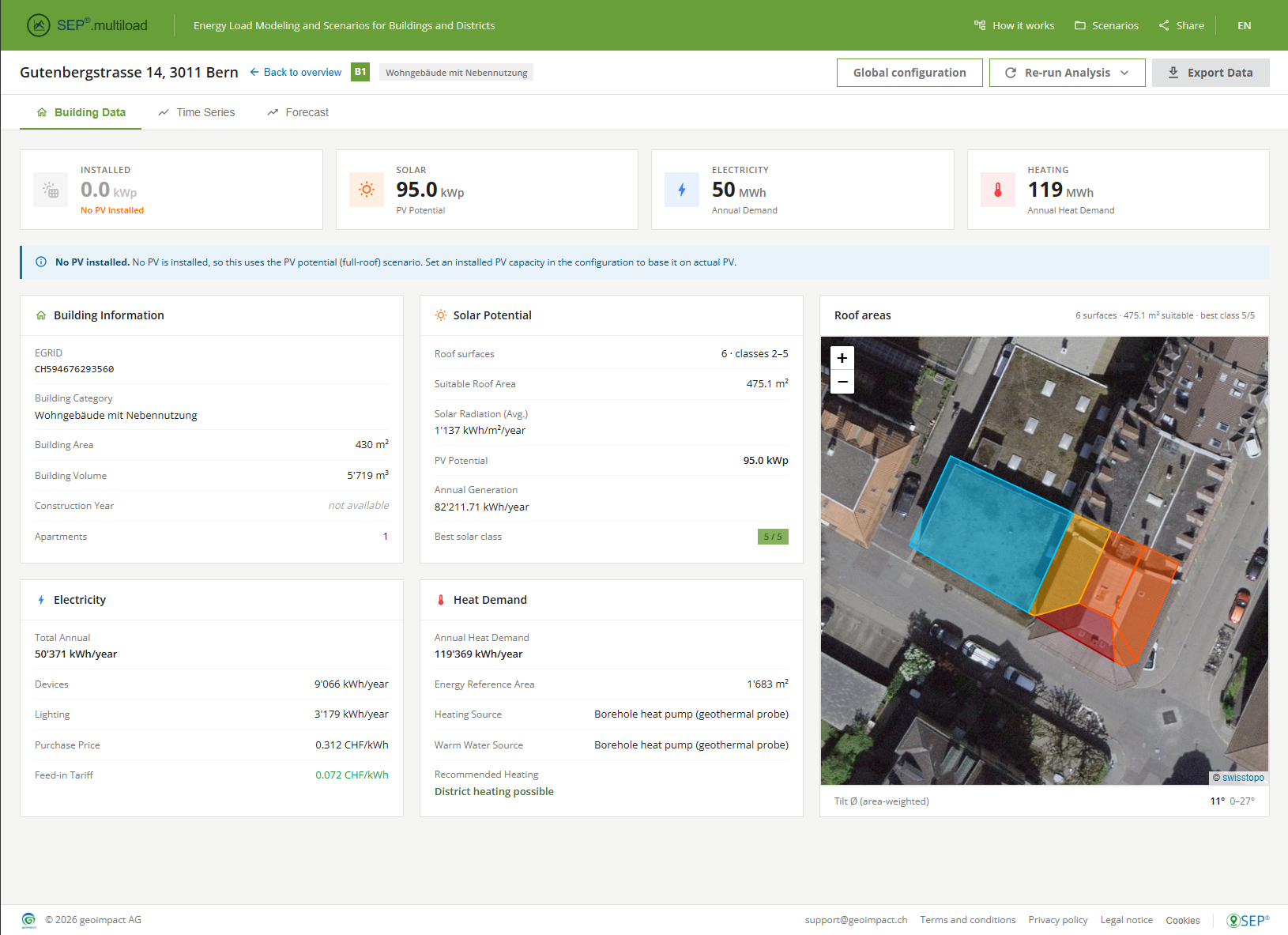
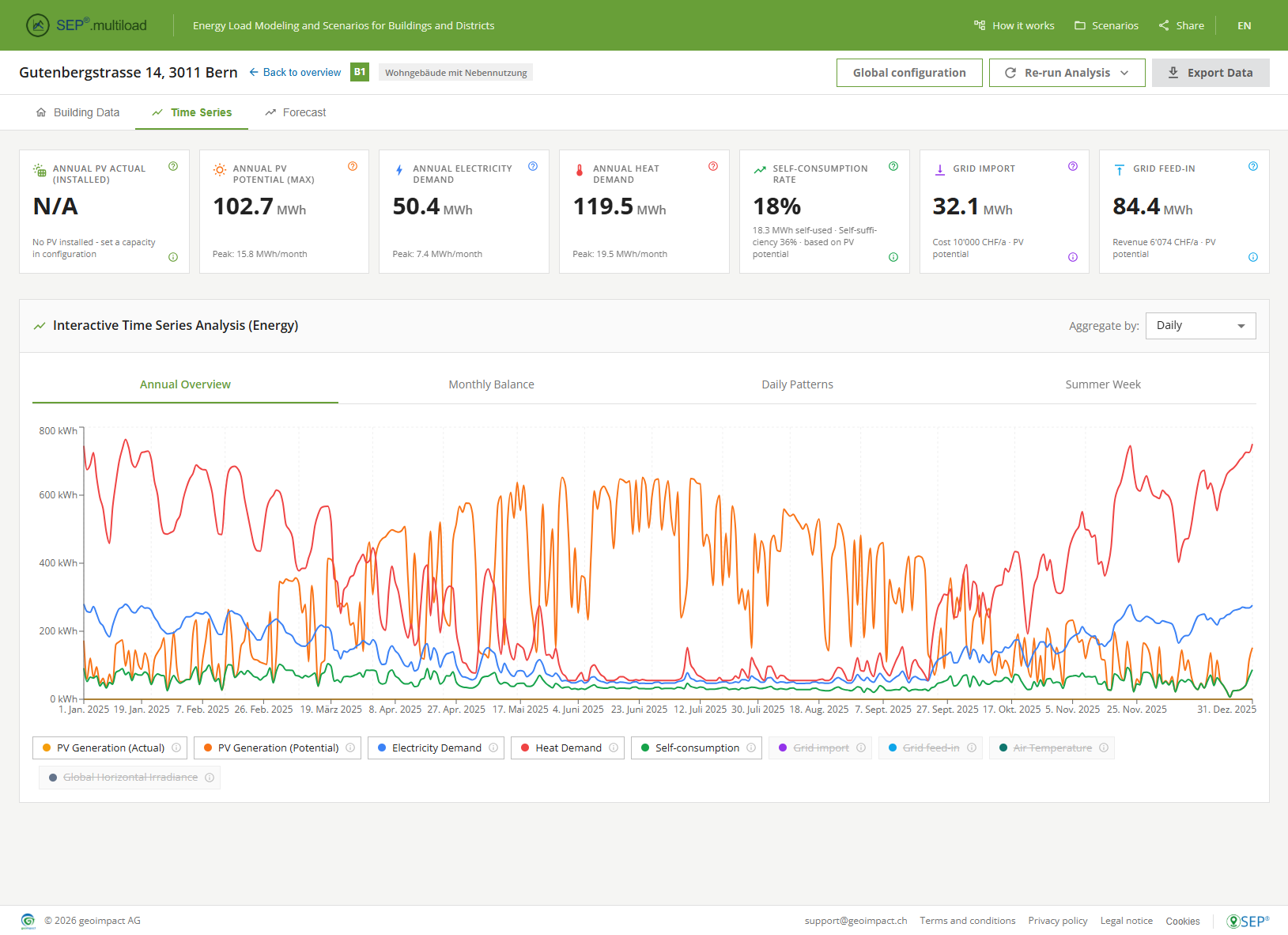
SEP.multiload works with authorised building and grid data from the SEP platform and validated Swiss time series – developed by geoimpact.
Access through your existing SEP account – no extra account, no separate onboarding.
Only released building and grid data, including grid-operator-specific tariffs.
Physics-based simulation with MeteoSwiss weather time series.
SEP.multiload is open in beta to all SEP users. Get in touch – we’ll show you what’s possible with your building data.